
Game changer for rail mobility: Knorr-Bremse and Trenitalia bring electromechanical braking system to the tracks
Knorr-Bremse advances the development of pioneering digital-electromechanical braking system with brake-by-wire (EM Brake)
At InnoTrans, Knorr-Bremse and Trenitalia (Gruppo FS) have announced the first-ever deployment of this key innovation in daily rail operations in Italy
The EM brake combines electrification, digitalization, and connectivity to enhance performance and energy efficiency
A key building block for the train of the future, whose braking systems will operate without compressed air or oil thanks to purely electric brake force generation (brake-by-wire)
It is digitalized, connected, and set to revolutionize modern train braking systems: with its digital-electromechanical braking system featuring brake-by-wire (EM Brake), Knorr-Bremse is opening a new chapter in rail innovation. Knorr-Bremse and Trenitalia are now jointly implementing the game-changing technology on a regional train in Italy that has entered regular service.
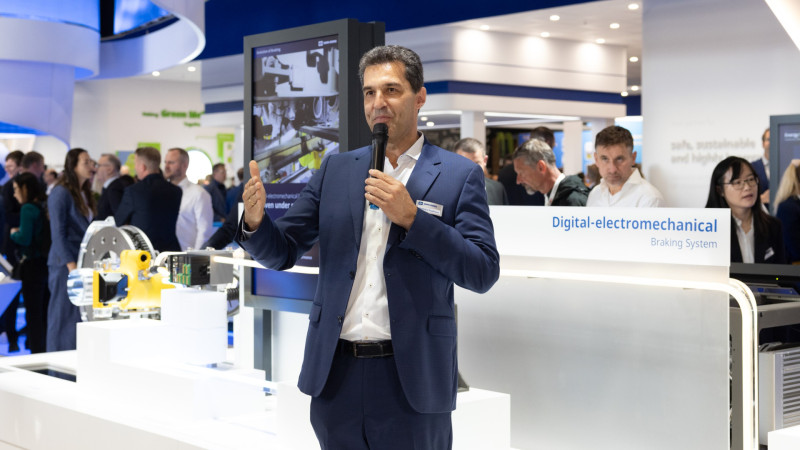
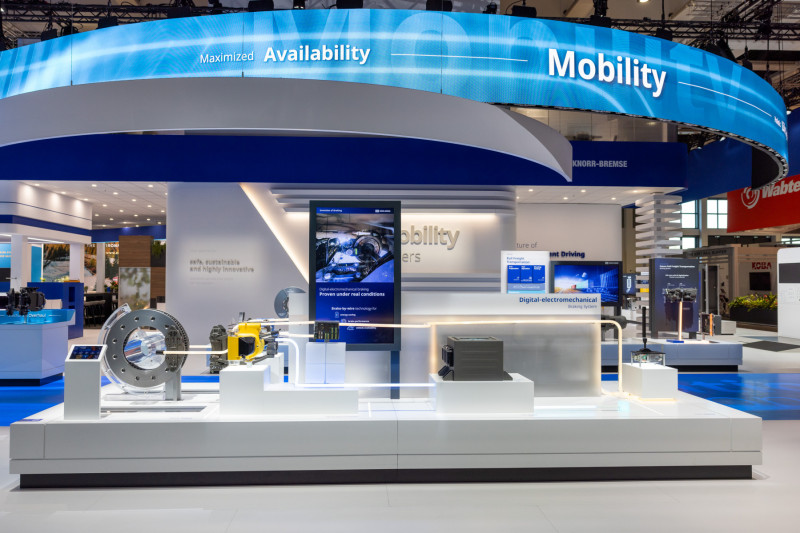
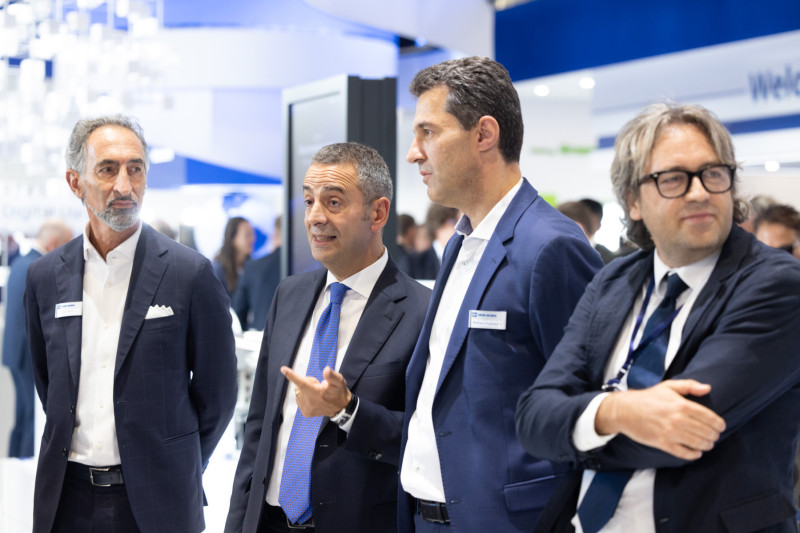
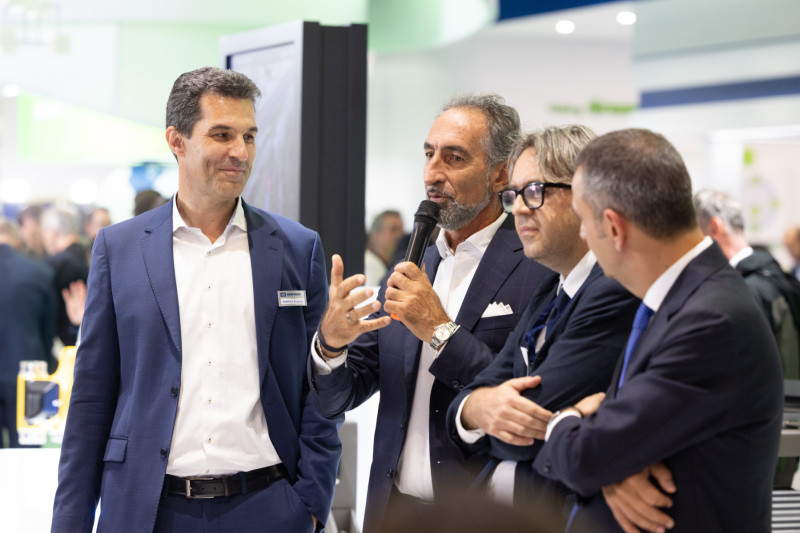
“Trenitalia has long proven to be an innovative partner, engaging with new rail technologies at an early stage and integrating them into operations”, says Matthäus Englbrecht, CTO of the Knorr-Bremse Rail Division. “The EM brake is a key technology with enormous potential to enhance performance, energy efficiency, and maintenance optimization, delivering significant benefits for the rail industry. The first deployment of the EM brake in daily operations will provide further valuable insights to help bring this innovation to market readiness across vehicle types and standards.”
Brake-by-wire: Better, lighter, quieter
The technology completely replaces the pneumatic and hydraulic components that are integral to today’s braking systems with electrical transmission of the braking signal and electromechanical generation of braking force by electric motors.
The more dynamic controllability of the electromechanical brake calipers, for example, delivers significantly improved performance, including faster response times, highly precise brake-force control, and shorter stopping distances. This enhances safety, stability, and reliability in day-to-day rail operations.
At the same time, the system can be made significantly lighter than conventional braking systems due to its reduced number of components, making a substantial contribution to energy savings. Overall, this also reduces the effort required for installation, servicing, and retrofitting, while optimizing the system’s lifecycle costs for operators.
The EM brake is equipped from delivery with telemetric monitoring and diagnostic capabilities, including predictive maintenance functions, and is regarded as a key for enabling more efficient, lighter, and more cost-effective trains. In doing so, it paves the way for the “airless train”: the vision of a train that operates without the compressed-air and hydraulic systems that have been the global industry standard for decades.
“I would like to thank Trenitalia for this valuable collaboration. The rail industry needs innovation more than ever, especially to make rail transport even more efficient and competitive. This project demonstrates just how essential collaboration between operators and industry is to accelerate the transformation of mobility and turning innovation into tangible progress,” adds Simone Mantero, Managing Director of Knorr-Bremse Rail Italy.
A demonstration of the EM braking system, showcasing its wide range of capabilities, is available for visitors to experience live at the Knorr-Bremse booth during InnoTrans (September 22-25, 2026).